The Mellow Tiger
The Mellow Tiger is a bar in Castle Rock, Maine, that functions as a central gathering place for the town's working-class men, particularly those who have settled into a life of drinking and idleness. It is a fixture of the town's social geography, a place where the local "rumpots" and "rumdums" congregate, and its presence looms over the boys' coming-of-age story as a symbol of the future they fear.
Location and Atmosphere
The Mellow Tiger is a bar in Castle Rock, a town in southwestern Maine. It is one of several local drinking establishments, alongside Sukey's Tavern, where men like Chris Chambers's father and Junior Merrill, Ace Merrill's father, spend their time. The bar is associated with a particular clientele: men who drink heavily and are often unemployed or on welfare, such as Chris's father, who is described as a drunk who "got welfare off and on—mostly on." The atmosphere is one of stagnation and resignation, a place where the town's "rummies" gather to drink and pass the time.
Role in the Boys' Lives
The Mellow Tiger represents the dead-end future that threatens to trap the boys of Castle Rock, particularly those from poor families. Chris Chambers, who is determined to escape his father's fate, refuses to drink, fearing he will become an alcoholic like his father. He tells Gordon Lachance that his father "never got his nose all the way out of the bottle anymore" and that his older brother was drunk when he committed a rape. Chris's fear of the bottle is directly tied to the Mellow Tiger and the culture it represents. Teddy Duchamp, after being rejected by the military, eventually "used to hang around the places where Ace and Fuzzy and the rest had hung around before him: the pool hall, the dance hall, Sukey's Tavern, which is closed now, and The Mellow Tiger, which isn't." This trajectory shows how the bar becomes a gravitational pull for those who cannot escape Castle Rock.
Connection to Ace Merrill
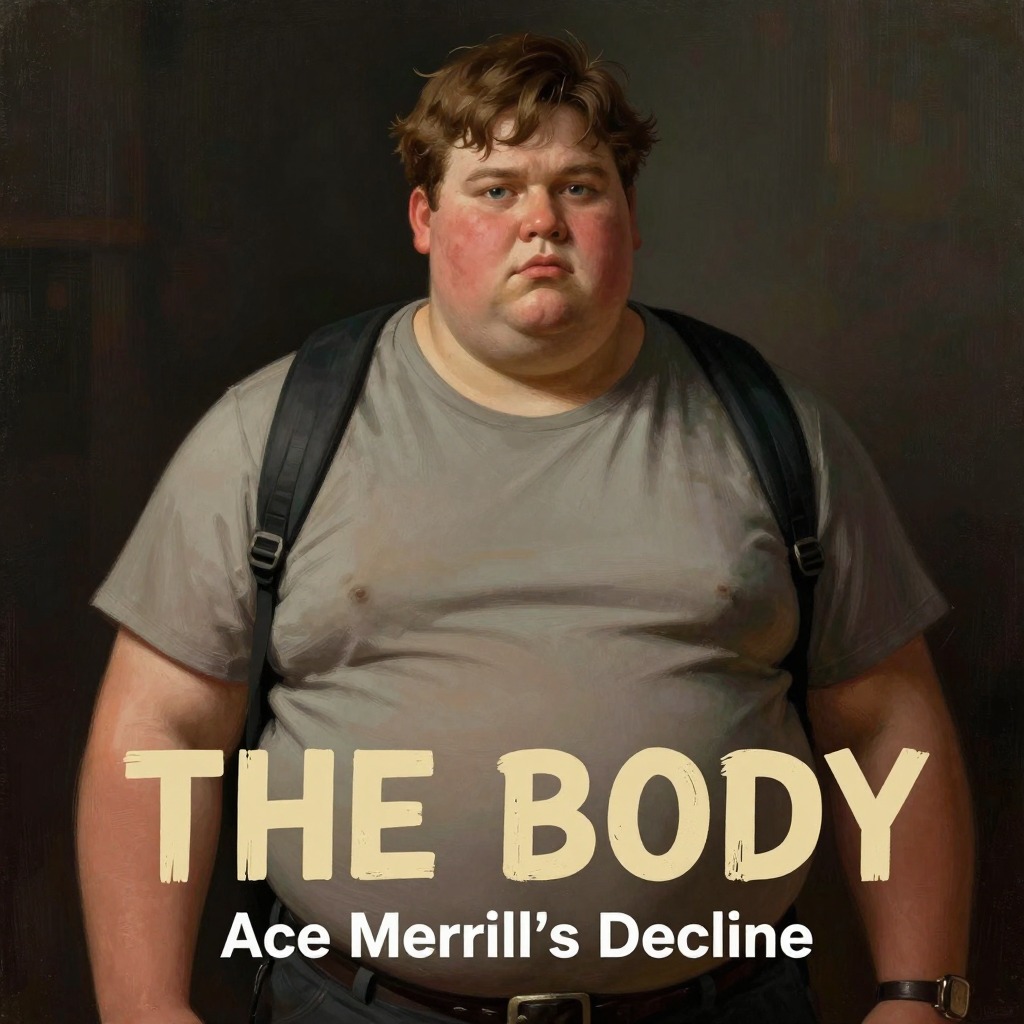
The Mellow Tiger is also the haunt of Ace Merrill, the town's teenage bully and leader of the local juvenile delinquents. Years later, when Gordon Lachance returns to Castle Rock as an adult, he sees Ace Merrill, now a fat, middle-aged man, pulling into the dirt parking lot beside The Mellow Tiger in a 1977 Ford station wagon. Ace gets out, hitches at his pants, and walks inside. Gordon imagines "the brief wedge of country-western as he opened the door, the brief sour whiff of Knick and Gansett on draft, the welcoming shouts of the other regulars as he closed the door and placed his large ass on the same stool which had probably held him up for at least three hours every day of his life—except Sundays—since he was twenty-one." This image of Ace, once a feared and violent teenager, now a regular at the Mellow Tiger, underscores the bar's role as a symbol of a life that has gone nowhere, a life of routine drinking and faded potential.
Thematic Significance
The Mellow Tiger is more than a setting; it is a symbol of the social and economic trap that defines Castle Rock for its poorer residents. It represents the fate that Chris Chambers desperately tries to avoid—a life of drinking, poverty, and stagnation. The bar's persistence, even as other establishments close, suggests the enduring nature of this trap. For the boys who grow up in Castle Rock, the Mellow Tiger is a constant reminder of what they might become if they fail to escape. It is the physical embodiment of the "darkness on the edge of town" that Gordon Lachance later writes about, a place where dreams go to die and where the cycle of poverty and alcoholism continues unabated.